Thursday, 2 February 2017

Finding a Moment


In her film, Heart of a Dog, Laurie Anderson responds to the passing of her pet dog and her partner Lou Reed through music and words that identify death as the ‘release of love’. It’s a touching film about powerful moments where our concept of life becomes clearer through death.  As Anderson describes it, she ‘expected to feel sad and lost. But I felt the opposite (…) How to open yourself to the world. And really appreciate it.” (http://www.waldemar.tv/, May 2016)

I felt a little of the same after the passing of my mother at the end of November last year.  I was working with organisations in Australia at the time, and found myself returning home with a different set of eyes.  The latest news from the charity sector and beyond left me with a sense of detachment, as though the things I cared for were suddenly disassociated from their meaning. I thought it was just because I was sad and lost too. But I wasn’t. I was starting to see from a stronger perspective.

‘Opened to the world,’ I experienced a shift in what had value. The ‘laws of the universe’ became more relevant to me than knowing the latest funding campaign or innovation programme.  Death sharpened my bullshit detector.  Looking back on 20 years of working in the charity sector, I found glaring fault-lines in the narrative of progress to ‘end youth disadvantage and homelessness’, or whatever the current terminology is.  As the stats keep reminding us that everything from street homelessness to health inequality is on the rise, it’s easy to feel that we are stuck between knowing what ought to be done, knowing what was done before, and our frustration to make things happen now.  I began to wonder if there was an opportunity in that ‘stickiness’ to shift how our various assets work to create deeper change.

Let me explain.  It is a popular belief that we ought to be more ‘mindful’ in how we balance the stresses of work with our life. What if it isn’t just the individual self we should be looking at though?  What if the organisational identities we ‘do good’ through are themselves a type of being whose means of production, culture and character can be directly associated with the causes they and we seek to address?  Look at the way people in organisations are supported, people work, people are paid, people talk about each other, how decisions are made, how things get funded, and you will often find examples where the values of doing good are opposite to their functioning. Does it matter? Absolutely. It’s in these things that we end up sticking with the patterns we wish we could transcend.

In former senior roles,  I used to go along with the idea that the end could justify the means.  It meant turning a blind eye to some of the more negative human and social ripples organisations create around them.  The complexities of the system we operate through might force us to work in high stress ways; where we have no time from one meeting, communication, bid and report to the next; where we are constantly too busy doing ‘things’ to care; where we big up ourselves over the significance of others: but that’s all part of the bullshit we have got used to.  Many of us end up cut off from taking responsibility for the actual world we shape in the shadow of over busy inboxes, work goals, business plans, strategic visions and meetings removed from the importance of ‘the now’.

The significance is profound: disadvantage and inequality can never be addressed until we know how to nurture their opposite through the ways we choose to do things – including, in particular, how we work. Organisations with power to do good have a double responsibility: to meet the needs of the people they are meant to benefit, first and foremost; but in doing so, to also create ways of working counter to the root causes of disadvantage they are passionate about. From how people are managed, to how they are paid, to where organisations work together, to what they do, and what they communicate in the world. It’s all relevant as part of the ‘asset base’ that defines what a moment is and what it can achieve.  If we don’t change how these operate, we keep our fingers on the repeat button of things that keep on limiting collective potential.  

Brian Eno addressed a similar theme in a recent interview with Simon Hattenstone in The Guardian (23 Jan, 2017), where he outlined his interest as a musician in ‘how you make a working society rather than a dysfunctional one like the one we live in at the moment – by trying to make music in a new way.’  For Eno, that meant trying to move away from the hierarchical model of an orchestra to embrace ‘the more egalitarian model of a folk or rock band’.  What does that difference mean for social organisations and how they operate?  

I don’t think it’s a simple case of organisations seeking to do good by switching from one mode of production to the next.  Inequalities abound in any structure which is not fully aware of itself.  We need to begin what I see as a gentle 'storm' in our perceptions, to keep a closer check on where the people and systems within a structure are, and by doing so make sure our assets are more ‘alive’ and ‘now’ in the moment we are in.  The summary questions below are starting points for how these conversations could be led by staff:

·      S: Are you Sharing the moment with yourself, and with others?  Do you have time to be aware of the world that is happening around you, to experience that with others you are working with, and to share in your work with organisations who can both benefit from you and benefit you?

·      T: Are you Treasuring this moment?  Are you focused on the needs and possibilities that lie in the here and now, as well as the ‘future good’ of tomorrow?  What can be done today that should be started right in front of you?  Do you talk about your beneficiaries as ‘now’ rather than just a possible future?

·      O: Are you able to Orientate the significance of what is happening now with the past and future? Can you understand the causes to your present, build upon learning in the past to accelerate decisions and impact, and recognise potential future effects from current actions and decisions?  And can you juggle between them? Are you able to see your past and current plans reflected in the present you are working in?

·      R: Are you willing to Revalue how you do things, as well as what you do? Can you reflect on how you do things, their consequences and relevance to your social mission, while staying attuned to developing fairer approaches and processes?

·      M: Are you prepared to measure in the Moment?  Do you have the means to recognise, learn from and feedback in the here and now with those involved, rather than just at a removed distance later on? Is the practice of change as clear as your theory?

We don’t have to experience death to share the same insights from Laurie Anderson’s film.  But we do have to be honest enough to invest in experiencing the world with eyes wide open. It’s a position I call being on the 'inspireside’of now - in a conscious space where individuals and organisations can embrace the responsibility to do good better.  Think you are too busy to get there? Think again.


Saturday, 25 June 2016

Storytellers of the world, unite and take over


Brexit has been a triumph of social division.  The 75% young people who voted to remain can be forgiven for feeling resentment against an older generation whose selfishness has already left them with a enough economic and environmental challenges to cope with.  Let alone whatever rights and relationships they will lose next.  Those in poorer communities, at the sharp end of a diminished stake in society, often voted to leave in the hope of something better.  It is no coincidence that votes to remain tend to map against lower rates of educational attainment and income – Brexit has been fueled by despair. The lack of a logical argument from both sides of the debate has left us with the absurd outcome of people in Cornwall voting to leave, while asking for the government to save them from the 60 million gap that losing EU funding will mean.  There will be plenty of people feeling let down by false promises in the years ahead. Faith in democracy is taking another beating in the corner.

In Australia, they talk about the importance of creating ‘inclusive growth’ – the idea that a healthy society can only exist when all sides are included in its benefits. Brexit is a reminder of what happens when you don’t get that: you vote for anything that brings the establishment down. The shadow of austerity and political neglect has left us in a deepening mire of our own making. But now is not the time to sink into it.  Whatever the outcome of Brexit, the clearest thing of all is that we are living at a time of absent leadership for the values of social justice and equality that should define the future of Britain.  As Rhiannon Lucy Cosslett concludes in her EU referendum opinion in The Guardian, for young people, it is the moment to ‘mobilise, organise, strategise, and above all hope’. 

Perhaps more than ever we need to establish better spaces for co-production and the sharing of power, both generationally but also socially, and across Europe.  From the way we run organisations, to the way we educate, employ and house people, we need a new approach that truly invests in potential.   The truth is, we have not been living in an equal society for all for some time.  Moments such as Brexit should make us more aware of what we too often choose to ignore.  There might be more hipsters in East London, where I live, but you don't have to look very far to see people struggling in the shadows of swanky apartment buildings for the new elite. The system and the way we do things, from where we live to how we work, is ripe for an upgrade.

How do we begin that?  By finding and inspiring a different story.  It’s a simple truth, which Jeanette Winterson was the first to note in the election aftermath.  Stories have an amazing power.   Over recent years, I have seen an increase in the number of youth charities using story telling; but it’s mostly stories to evidence the now and themselves rather than shape a better future of real change.   We keep ‘sleeping out’ with stories of need instead of ‘thinking out’ together to create better worlds.  Inspiration is the first ingredient to build futures, but we seem to be running on empty. Power is clung to too much and used too little for good.


What people really wanted out of this election is actually a story worth telling and working on.  Most people on both sides voted for essential truths that could and should form part of a more positive narrative for inclusion across Europe.  Without a political party or institution fit to shape that story truthfully, it’s time for us to get on with it. Storytellers of the world, unite and take over. 

Looking for a place to begin? Check out  Sounddelivery's Being The Story on 16th September

Thursday, 21 April 2016

Climbing Beyond Advantaged Thinking


‘A climb more demanding in spirit than the body…’

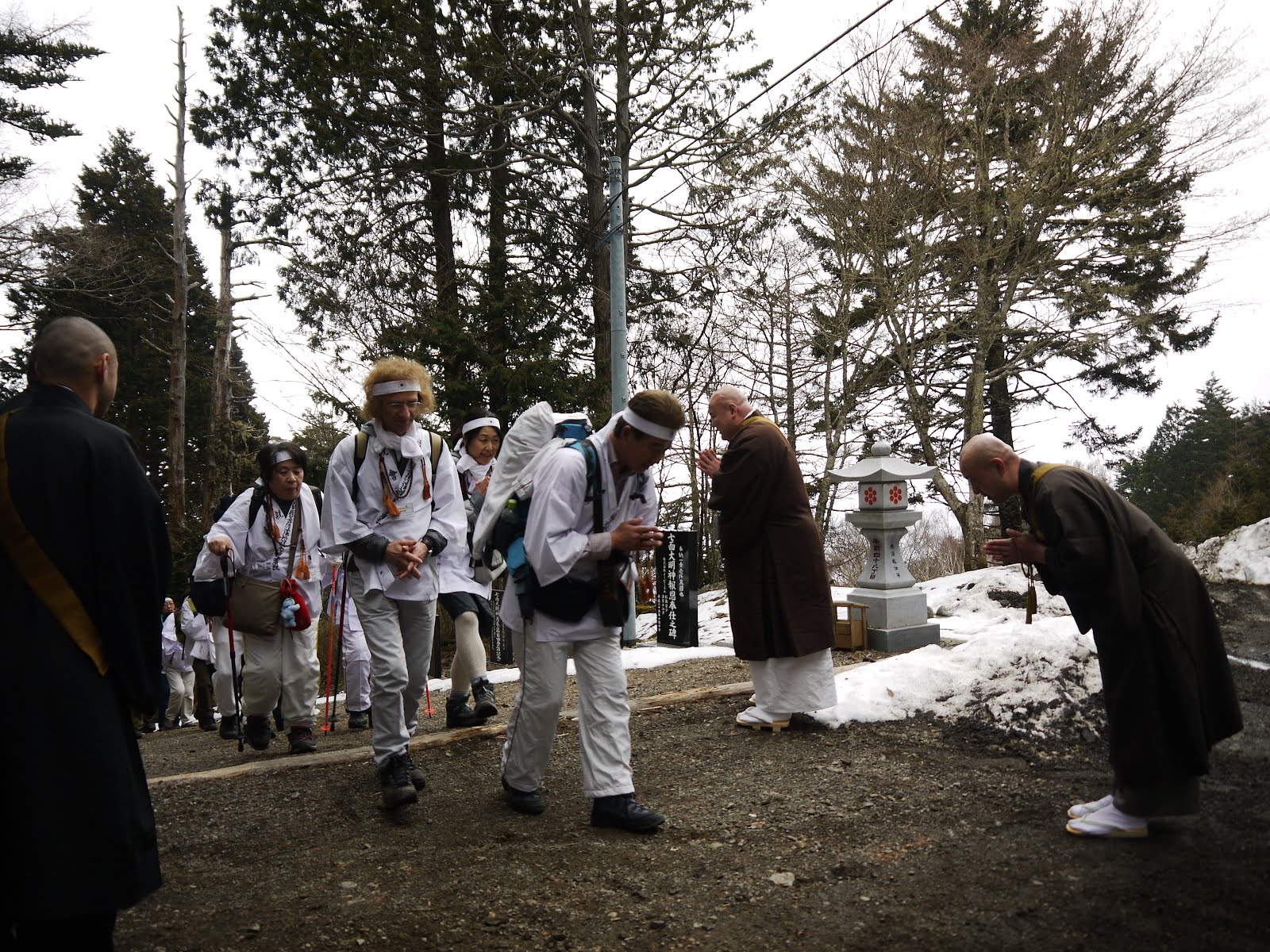
With these words, Mount Shichimen volcanoed into consciousness.  The magic mountain, shaking my mind with dreams of an expedition into the soul. It would take seven years until I could join a Buddhist pilgrimage for the three day march.  People trekked its contours each spring and autumn to reconnect with the laws of the universe, the memory of ancestors. I too sought to chant the mountain's path to reach sunrise over Fuji, uncertain what the journey would reveal.

It seemed I had already started the climb on my first trip to Japan in 2009.  I was enjoying coffee and cake on a visit to the home of Mr Ijima, the leader of the Shishin temple who organise a twice yearly trip to the mountain.  In the jet-lag mist of stories about Mount Shichimen that night, I felt the summit of something I couldn’t yet understand.   Mr Ijima explained that my work at Foyer Federation was like a tree growing branches but missing its roots; that we were looking at young people’s current and future talents without considering the full significance of where they came from.  Thus, the full potential to transform conflict and challenge, he felt, was being lost.  Mr Ijima showed me how his temple applied a combination of Buddhism and modern psychology to unravel the connections of generational influence. I began to wonder if the importance of family was something missing within me as well as my work.  How to make sense of it though, as something relevant beyond an eastern belief?  What followed from that night is too difficult to explain here, but its relevance has haunted me ever since.

After 2009, I introduced the concept of Advantaged Thinking with Foyer Federation as a way of applying positive, asset-based approaches to improve the lives of young people we ‘disadvantaged’ with our beliefs and stereotypes.  It led to over 5 million pounds of funding in 2013-15 for Advantaged Thinking programmes in the context of advancing young people’s health and employability. That should have been a pinnacle moment.  But by spring 2015, my mother had suffered a stroke, my parents and I struggled to embrace its change in our life, and I resigned my job in the belief that something was lacking in how charity (or my experience of it) worked, which I felt I could discover by being outside it.  In the isolation that followed, I had my chance to find the meaning of Mount Shichimen.  I reconnected with lost family relatives and retraced the paths of grandparents whose memory had resurfaced during my first trip to Japan.  I spent more time in ‘the moment’. Sometimes I felt hurt as people I once helped seemed, in my frustration, to ignore my new ideas on charity as an art and the development of inspiration to impact on more lives. Equally, though, I felt more aware of the need to let the past go – to create a different space for fresh meaning to exist.  Mount Shichimen illuminated my imagination with hope.

I laced up my hiking boots two days after the long flight from London.  The time had finally come. Together with my Japanese family, our footsteps carried the lightness and weight of connected ancestors.  We experienced closeness among the spring shades of mountain colour.   Sometimes the climb was unrelenting in its steepness, while at other moments the belief of reaching the summit overshadowed straining limbs.        
                                             

I remembered how my grandfather Charles had died from a heart murmur, long before I was born. My heart punched out the rhythm of the climb.  At every point on the journey, as we stopped to mark the presence of shrines, we stripped away layers of our daily life like onion skins, reaching for the sweeter values beneath.  Most of all, I felt the appreciation of the pilgrims - from the tea that greeted us at resting points, to the stones we sometime slipped on, everything had equal resonance and space.  The right to be is something so easily forgotten.

When we reached the summit, scattered like runners at the end of a marathon, a line of monks waited in welcome for us, their faces smiling moons.  The moment needed no applause; everything defined us.


Existence was so fragilely present, in the touch of snow under foot, an exchanged bow, the treasured tears cleansing my eyes.  It was overwhelming, as though we had entered an outer layer of our lives, and only stars lay beyond the thin air we breathed. 


I felt it the next morning, too, rising to a snowy world of unfamiliar dark shapes. After a night under a cocoon of blankets, we watched in the bitter cold as a bank of clouds around Mount Fuji lit with the the sharp gold of a fresh chanted dawn.  A white space of inspiration, containing all possibilities, seemed to float between us.  It was as though, rather than reach a new horizon, we had returned to an older sky. 

After the long descent down, we got dressed and took our sleepy seats on the bus for the drive back on the motorway.  At the first stop for refreshments, people ventured out into a shopping mall, returning with a treasure trove of ice cream, coffees and junk food.  Familiar habits were taking us home.  Our climb beyond the mountain had begun.

The word ‘shishin’ means children’s feelings toward their parents, and parent’s feelings toward their children.  In Shishin, both feelings are brought together to create harmony from the conflict of experience, just like the climb brought us together, from different lives, to a single illumination of dawn.  I reflected if it was this disruptive harmony that was missing in our work in the UK.  We seek to involve young people, but do we fully appreciate what their challenges signify, have we found a dialogue to embrace our joint transitions together, with equal power and appreciation? I wondered if an expression of Shishin would deepen our discovery.  Putting aside existing structures and beliefs, a starting point for generational inspiration could flourish. 

For me, this is what the magic of Mount Shichimen represents.  Like the fragile blossom of a Japanese cherry tree it blooms and fades under our eyes.  It is as much within us, as it grows outside through others.  Until we reach a point to bring inspiration back into our all our lives, we repeat the same problems that are the root of things we wish to overcome.

The climb is something best measured, as with all experiences of inspiration, in its gradual treasuring over time.  I am still descending, unravelling from it, climbing again through it, reaching for new ideas on the trek to good; looking for others to join with my footsteps and heartbeat on...